
-
ProductShanghai Taichi Magforce Machinery Co., Ltd. specializes in the design and manufacture of electro-permanent magnetic chucks under the AMAG brand. Drawing on the technical strengths of original Italian magnetic technology and integrating practical industrial application requirements, the company has developed a comprehensive range of electro-permanent magnetic chuck solutions. These products are widely used in machine tools, injection molding machines, stamping equipment, and electro-permanent magnetic lifting systems.

-
ServiceWith a strong technical foundation and in consideration of the actual conditions of customers in the Chinese market, we have innovatively launched the dynamic mold safety anti-drop system and the full board magnetic reading function.
-
About UsShanghai Tower Pool focuses on the production and application of electric control permanent magnet quick mold change systems. Our team originated from the Italian Taima China team, which is known in the industry as the first pioneers of "magnetic templates" in China. After more than a decade of growth in the Chinese market, we have provided installation, maintenance, and repair services for hundreds of magnetic templates.
-
BlogShanghai Tower Pool Machinery Co., Ltd. adheres to the principle of 'survival by quality, precision by rigor, and trust by sincerity', and continues to provide customers with standard, efficient, and safe magnetic products. We will cooperate with you with high-quality service and reasonable prices to create a better future together!
Injection Molding Machine Magnetic Platen
The magnetic platen adopts a grid-type pole structure with alternating N and S poles. Magnetization is reversed through a brief pulse current, enabling rapid magnetic switching with minimal energy consumption.
Key words:
AMAG
Magnetic platen
Classification:
Magnetic Platens
Detailed introduction
Quick mold change animation demonstration
Working principle
Internal structure
The magnetic platen is constructed with a grid-type arrangement of alternating N and S poles. By applying a brief pulse current, the magnetic field direction is reversed, allowing the platen to switch efficiently between magnetized and demagnetized states.
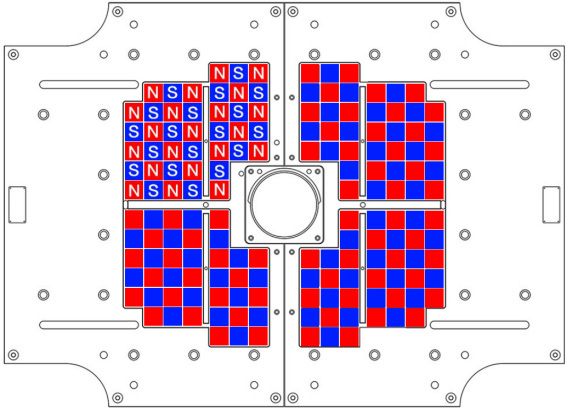
Magnetized state The magnetic platen emits external circulating magnetic lines with a penetration depth of 20mm, securely fixing the mold while not affecting the components inside the mold. Continuous electrical energy is not required during operation, and no heat is generated.
| Demagnetized state The magnetic lines are converted from an external circulation state to an internal circulation state through current pulses, easily loosening the mold.
|
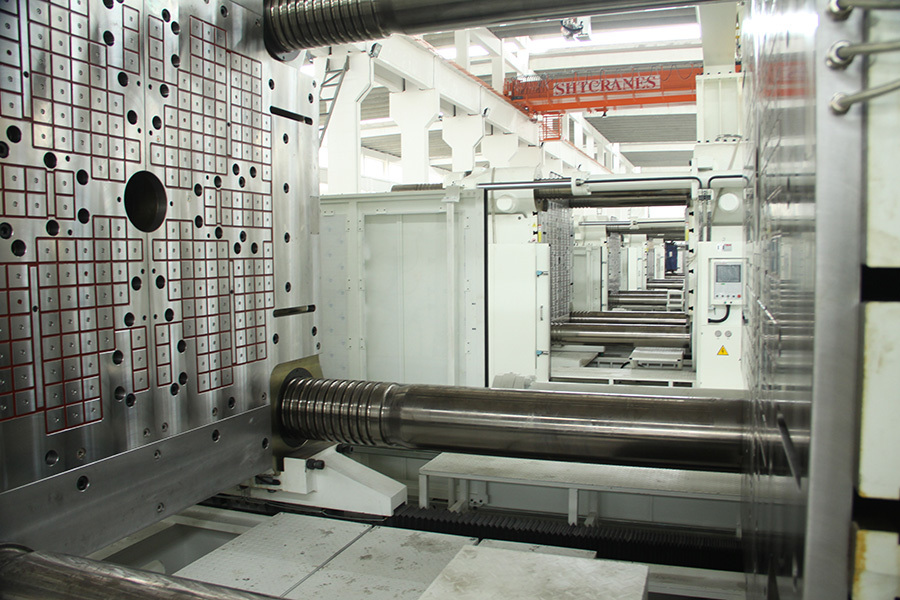
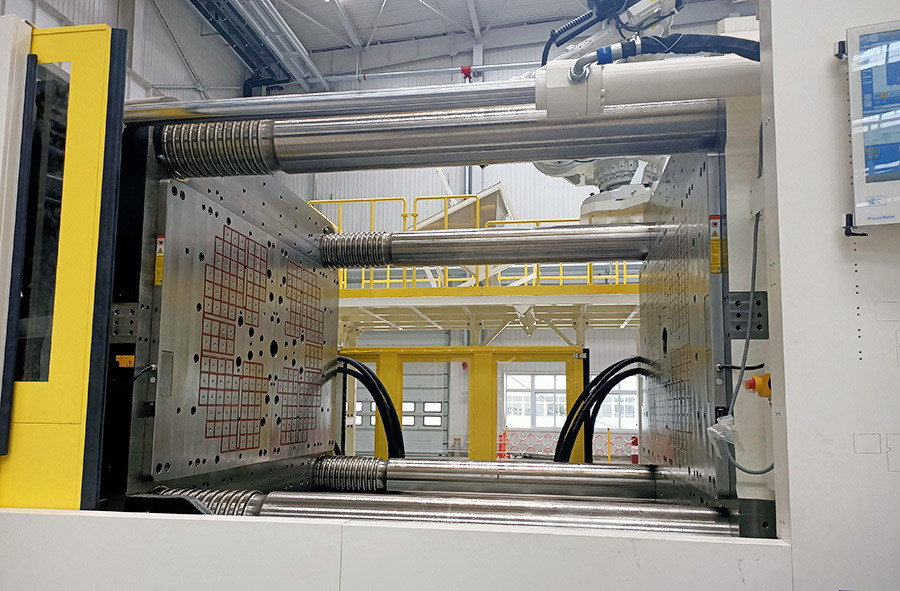
Application of magnetic platen on injection molding machine
 |  |
Advantages of magnetic platen
| Precise positioning | The magnetic platen achieves precise positioning through magnetic force, improving product dimensional accuracy and reducing defect rates. |
| Fast opening and closing | The opening and closing speed of the magnetic platen is very fast, significantly increasing the production cycle of the injection molding machine. |
| Energy-saving and efficient | Due to the precise positioning and fast opening and closing of the magnetic platen, energy consumption of the injection molding machine can be reduced, achieving energy conservation and environmental protection. |
| Easy to maintain | The structural design of the magnetic platen is relatively simple, resulting in lower maintenance costs. |
Application value
| Increase production efficiency | The rapid opening and closing and precise positioning of the magnetic platen enable efficient production during the injection molding process, increasing capacity. |
| Reduce production costs | By reducing defect rates and energy consumption, production costs can be lowered. |
| Improve product quality | The precise positioning of the magnetic platen ensures product dimensional accuracy and appearance quality. |
| Promote technological innovation | The application of magnetic platen technology provides more possibilities for the development of injection molding machine technology, promoting technological innovation in manufacturing. |
Previous Page
Next Page
Previous Page
Next Page
FAQ
Will the magnetic force be lost during a power outage? How long does the magnetism last?
Electro-permanent magnetic platens are designed so that magnetic force is not lost when power is cut. Electrical power is required only during the brief magnetization and demagnetization process (typically 1–4 seconds). During operation, the system does not rely on continuous power to maintain clamping force. Magnetic performance degradation is an extremely slow process. As a result, electro-permanent magnetic platens typically achieve a service life of over 30 years, and often significantly longer under normal operating conditions.
If the mold back plate area is too small and cannot cover enough magnetic poles, will the clamping force be affected?
Yes. When the mold back plate area is too small to effectively cover a sufficient number of magnetic poles, the available clamping force of the magnetic platen will decrease in proportion to the reduced contact area. In injection molding applications where opening forces and mold resistance are relatively high, insufficient magnetic coverage may increase the risk of mold slippage. It is therefore recommended to increase the mold back plate size or adapt the mold to ensure proper compatibility with the injection molding machine and magnetic platen system.
Can large and heavy molds be securely clamped?
Yes. The magnetic platen uses high-performance rare-earth permanent magnetic materials combined with soft magnetic steel, representing the latest advancements in electro-permanent magnetic technology. These materials provide exceptionally strong magnetic force and high structural strength. The magnetic platen is designed so that a single platen can support the full weight of an entire mold. Even large automotive molds weighing 30–45 tons can be securely and reliably clamped to the magnetic platen with ease.
Are magnetic platens water-resistant, oil-resistant, and corrosion-resistant?
Yes. The internal magnetic components of the magnetic platen are treated with specialized waterproof and anti-corrosion coatings. All internal wiring coils are independently pre-assembled using a sealed process. The rear side of the magnetic platen features a fully enclosed structure, while the front surface is sealed with multiple layers of potting compound in accordance with IPX4 waterproof standards. This design ensures reliable insulation performance and stable operation of the magnetic platen in harsh industrial environments.
Will excessive injection molding temperatures reduce magnetic clamping force?
The magnetic materials used in electro-permanent magnetic platens undergo strict high-temperature resistance testing and are suitable for plastic injection molding applications. If the mold back plate temperature exceeds approximately 120 °C, the clamping force of the magnetic platen may decrease. To prevent this, the magnetic platen is equipped with a temperature alarm system. When a temperature warning is triggered, heat dissipation measures should be applied to the mold back plate to avoid any reduction in magnetic clamping force. For special applications, customized magnetic platens can be designed to operate at temperatures of up to 200 °C.
Can molds with insulation plates be used with a magnetic platen system?
After installing an electro-permanent magnetic quick mold change (QMC) system, most molds can be used directly. However, molds with irregular or asymmetrical structures should be evaluated by the supplier before use. Molds equipped with insulation plates cannot be directly clamped to a magnetic platen, as insulation plates are typically made from non-magnetic, low thermal conductivity materials. However, if the insulation plate is installed between the magnetic platen and the injection molding machine platen, the system can operate normally.
Is the real-time monitoring and machine interlock system reliable?
Yes. The electro-permanent magnetic quick mold change (QMC) system supports standard Euromap 70.0 or Euromap 70.1 interfaces. These interfaces are widely recognized for their stability and reliability and are commonly used in quick mold change and injection molding automation systems.
Is the magnetic field harmful to the human body?
No. When the magnetic platen is magnetized, a magnetic field is present at the working surface. This is a static magnetic field, not an electromagnetic field, and it poses minimal risk to the human body under normal operating conditions. The effective magnetic field range is limited to a short distance, typically within several tens of millimeters from the platen surface. Personnel with implanted medical devices should consult a medical professional before working near magnetic equipment. In addition, magnetic platens will attract ferromagnetic objects such as screwdrivers, wrenches, and watches. Credit cards, ID cards, and other magnetic-sensitive items should be kept away to prevent magnetic demagnetization or data damage.
Are maintenance and operating costs high over the long term?
No. Electro-permanent magnetic systems consume electrical power only during the brief magnetization and demagnetization process. As a result, component aging is extremely slow. In addition, the magnetic platen contains no moving parts, which eliminates mechanical wear. Therefore, frequent maintenance and inspections are not required, and long-term operating and maintenance costs are minimal.
How much cost savings can be achieved?
Taking a 2800-ton injection molding machine as an example: Labor savings: With traditional mechanical mold clamping, mold change typically requires three operators and takes approximately 2.5–3 hours. With an electro-permanent magnetic quick mold change (QMC) system, only one operator is required, and the mold change can be completed in approximately 0.5 hours.
Related Products
Immediate consultation
We will contact you within one working day. Please pay attention to your email.
With reliable service and competitive pricing, Shanghai Taichi Magforce is your partner for long-term success!


Contact Us