
-
ProductShanghai Taichi Magforce Machinery Co., Ltd. specializes in the design and manufacture of electro-permanent magnetic chucks under the AMAG brand. Drawing on the technical strengths of original Italian magnetic technology and integrating practical industrial application requirements, the company has developed a comprehensive range of electro-permanent magnetic chuck solutions. These products are widely used in machine tools, injection molding machines, stamping equipment, and electro-permanent magnetic lifting systems.

-
ServiceWith a strong technical foundation and in consideration of the actual conditions of customers in the Chinese market, we have innovatively launched the dynamic mold safety anti-drop system and the full board magnetic reading function.
-
About UsShanghai Tower Pool focuses on the production and application of electric control permanent magnet quick mold change systems. Our team originated from the Italian Taima China team, which is known in the industry as the first pioneers of "magnetic templates" in China. After more than a decade of growth in the Chinese market, we have provided installation, maintenance, and repair services for hundreds of magnetic templates.
-
BlogShanghai Tower Pool Machinery Co., Ltd. adheres to the principle of 'survival by quality, precision by rigor, and trust by sincerity', and continues to provide customers with standard, efficient, and safe magnetic products. We will cooperate with you with high-quality service and reasonable prices to create a better future together!
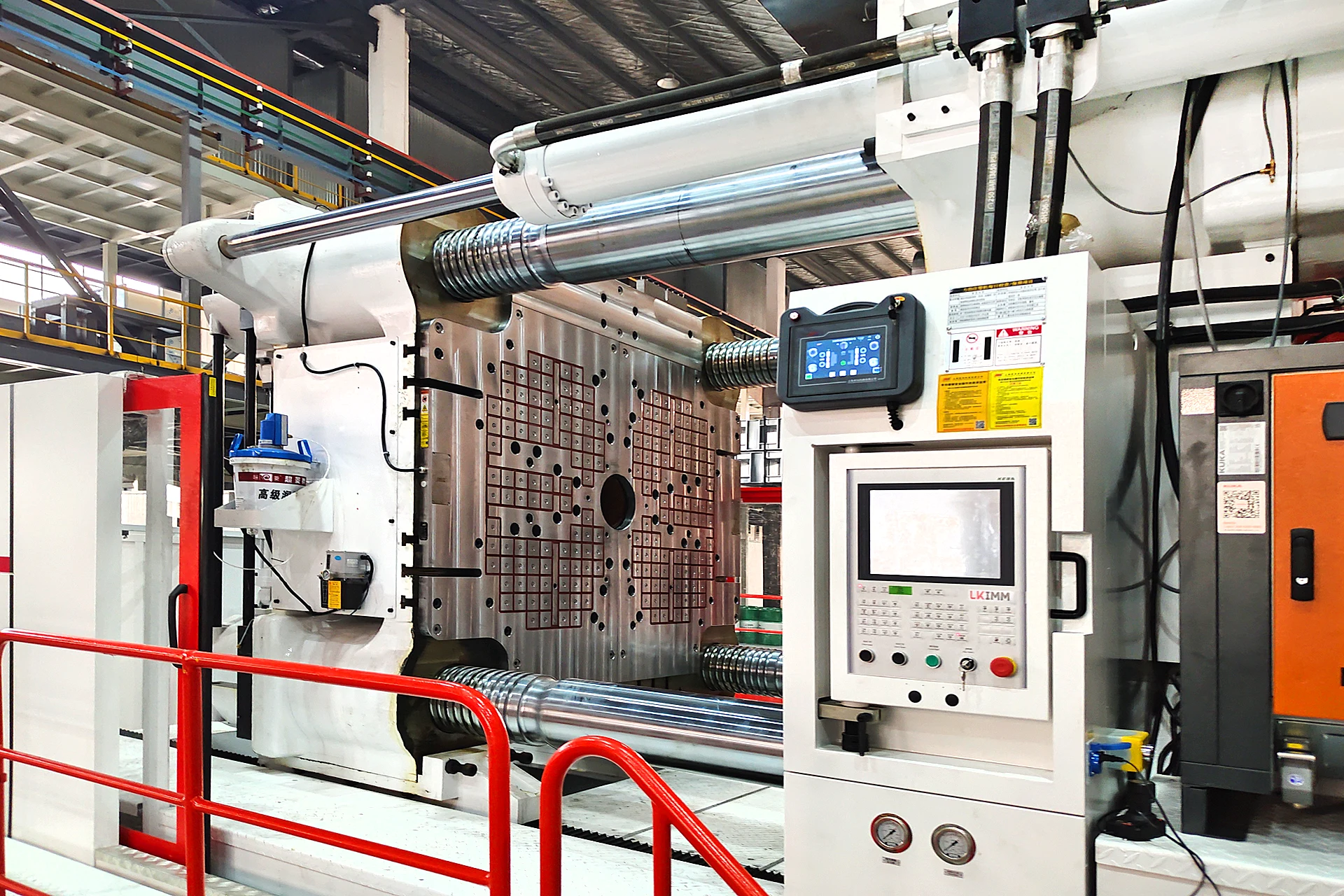
PROFESSIONAL
High-Performance Magnetic Platens for Rapid Mold Change
Shanghai Taichi Machinery (AMAG) develops advanced magnetic platens with full-surface magnetic reading, engineered for fast, safe quick mold changes (QMC).
VIEW MORE
APPLICATION
1300T Dual-Color Injection Molding Magnetic Platens
Dual and Multi-Color Injection Molding Magnetic Platens for Faster Mold Changes
VIEW MORE
OUTSTANDING
Industrial Electro-Permanent Lifting Magnets
Electro-Permanent Lifting Magnets Offering Energy Efficiency, Safety, and Flexible Lifting
VIEW MOREComprehensive Analysis of Electro-Controlled Permanent Magnet Chuck: From Principles to Applications
Author:
Source:
Comprehensive Analysis of Electrically Controlled Permanent Magnetic Chucks: From Principles to Applications
1. Definition and Core Principles
An electrically controlled permanent magnetic chuck is a device that uses permanent magnetic materials (such as neodymium iron boron) to generate magnetic force and achieves rapid switching of magnetic force through an electrical control system. Its core principles are as follows:
Magnetic Circuit Design Through the formation of a closed magnetic circuit by permanent magnets and magnetic conductors, magnetic lines penetrate the workpiece during adsorption, and circulate internally within the chuck when released.
Electrical Control Switching Using pulse current to change the magnetic pole direction, achieving rapid on/off of magnetic force within 0.1-0.3 seconds, maintaining magnetic force without continuous power supply.
2. Technical Advantages and Performance Parameters
Core Advantages
Energy Saving and High Efficiency Standby power consumption is zero, with instantaneous power use only during magnetic force switching, consuming only 1%-5% of the energy compared to traditional electromagnetic chucks.
Safety and Stability No temperature rise effect, constant magnetic force, no loss of magnetism when power is off, suitable for precision machining.
Deep Customization Supports multi-pole control design, adaptable to irregular workpieces (such as curved surfaces and thin plates).
Key Parameters
Parameter Description Suction Range 80-2500 N/cm², needs to be matched according to workpiece weight and material (such as cast iron, stainless steel). Operating Temperature Temperature resistance ≤80℃, cooling system required for high-temperature environments. Response Time ≤0.3 seconds, supports high-frequency rapid clamping. Protection Level IP67 or above, suitable for cutting fluid and oily environments.
3. Application Scenarios and Typical Cases
Machine Tool Processing
CNC Machining Center Replaces traditional chucks, enabling five-sided machining with one clamping, improving accuracy by 30%.
Grinding Machine Application Adsorbs thin-walled parts (thickness ≥3mm), deformation ≤0.01mm.
Case Study A certain automotive parts factory adopted electrically controlled permanent magnetic chucks, increasing gear processing efficiency by 40% and reducing defect rate by 2%.
Automated Production Line
Robot Handling Integrated with vision systems to achieve precise grasping of randomly placed workpieces.
Flexible Production Line Through magnetic pole zoning control, compatible with various sizes of workpieces, reducing changeover time to 5 minutes.
Special Fields
Shipbuilding Adsorbs large curved steel plates, anti-slip force ≥10 tons.
Nuclear Power Maintenance Radiation-resistant design, used for fixing tools inside reactor pressure vessels.
4. Purchasing Decision Framework
Load Calculation
Safety Factor Theoretical suction force should be 3-5 times the weight of the workpiece (considering dynamic load and vibration).
Material Correction Suction force for stainless steel needs to increase by 20%-30%, and for non-ferrous metals by more than 50%.
Control Compatibility
Interface Protocol Confirm support for industrial buses such as Modbus, Profibus, facilitating integration with PLC systems.
Feedback Function Preferably equipped with intelligent modules such as magnetic force detection and temperature monitoring.
Environmental Adaptation
Explosion-proof Requirements Dusty environments require ATEX-certified explosion-proof models.
Space Constraints Ultra-thin chucks can be as thin as 35mm, suitable for compact machine tools.
5. Maintenance and Troubleshooting
Daily Maintenance
Cleaning Use non-metallic scrapers for chips to avoid surface scratches.
Calibration Check magnetic force distribution every six months; if error exceeds 5%, return for adjustment.
Common Faults
Insufficient Magnetic Force Check if the permanent magnet is demagnetized (remanence below 90% of nominal value) or if there is a gap in the magnetic circuit.
Control Failure Check if the pulse coil is broken (measure resistance with a multimeter).
6. Industry Trends and Innovations
Material Upgrades
Samarium-Cobalt Permanent Magnets Temperature resistance up to 350℃, replacing neodymium iron boron for high-temperature environments.
Nanocrystalline Alloys Magnetic permeability increased by 50%, reducing hysteresis loss.
Intelligent Development
Adaptive Suction Cup Real-time adjustment of magnetic force through pressure sensors to adapt to workpiece deformation.
Digital Twin Simulate magnetic force distribution to optimize magnetic pole arrangement design.
Green Manufacturing
Rare-earth-free Magnets Develop ferrite-based composite permanent magnet materials to reduce costs and resource dependence.
Circular Economy Suction cup main body design life ≥ 10 years, permanent magnets can be recycled and reused.
Choosing an electrically controlled permanent magnet suction cup is essentially an investment in an efficient, safe, and intelligent workpiece clamping method. Through precise selection, scientific use, and continuous innovation, it can significantly enhance the competitiveness and sustainability of manufacturing systems.
Related News
With reliable service and competitive pricing, Shanghai Taichi Magforce is your partner for long-term success!


Contact Us